Blood and fluid warmer
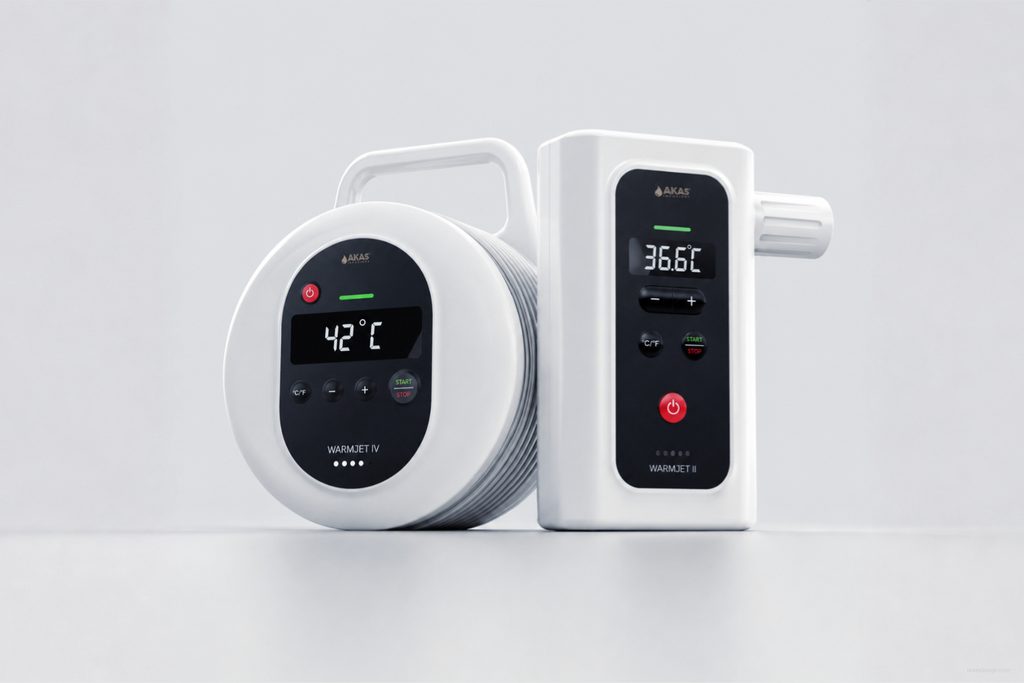
AKAS Infusions makes WARMJET IV, a blood and IV fluid warmer used in the operating room, the ICU and in transit, keeping transfused blood and infused fluids within a safe range of 36°C to 41.5°C before they reach the patient. A second configuration, WARMJET IV Plus, pairs the same unit with AKAS’s HEATPLUS heated silicone extension tube, so the fluid stays warm along the line as well as in the chamber.
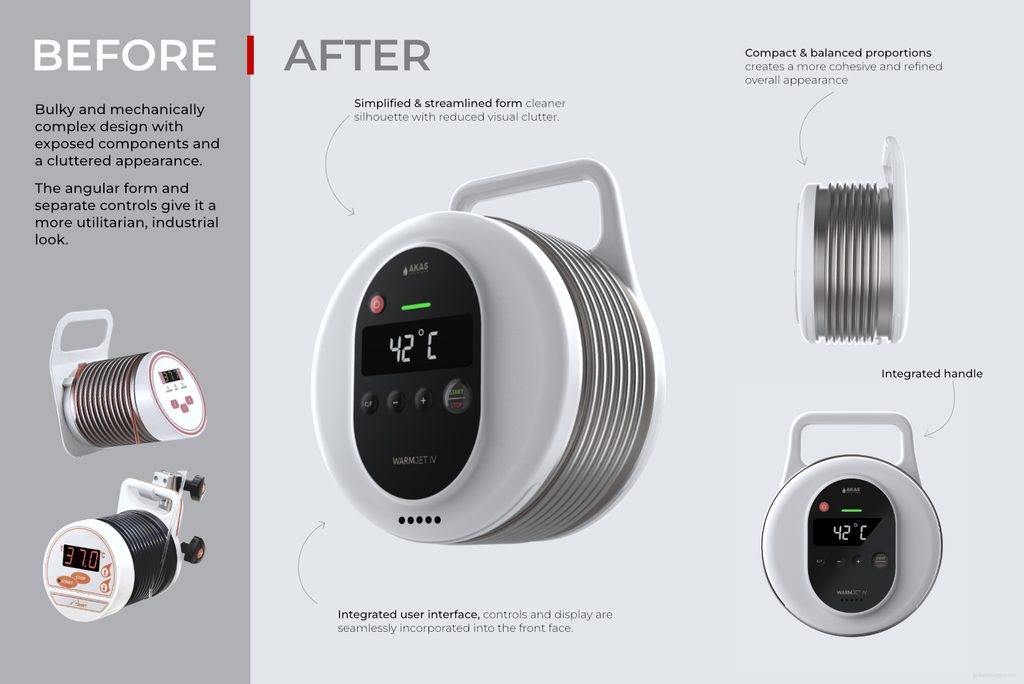
Ticket Design worked with the client on the industrial design of the device, redesigning its external architecture and ergonomics from client’s own existing product.
The category
A patient’s core temperature drops fast under anaesthesia, during major surgery and during trauma resuscitation, and cold blood or IV fluid going into the body pulls more heat out of the patient it is meant to be saving. Warming blood and IV fluids close to body temperature before they reach the patient is one of the standard tools anaesthesiologists and trauma teams use to prevent this.
Most warmers on the market are built as utilitarian clinical instruments, a dial, a clamp and a wall-mounted control panel, with little thought given to how the device is read or handled under pressure.
The design work
Ticket Design’s brief covered the device’s product architecture and ergonomics, aimed at a calmer, more human-centric interaction for the clinician operating it and the patient beside it. Our work was industrial design, the interface legibility and the way the unit is carried and mounted ultimately released for manufacturing
Design features
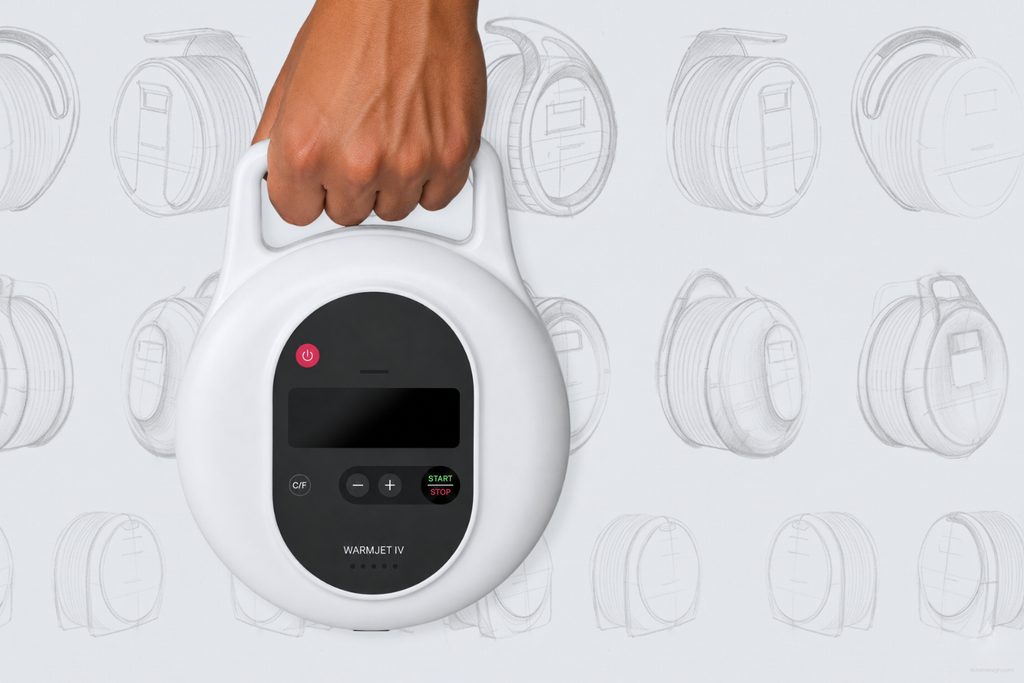
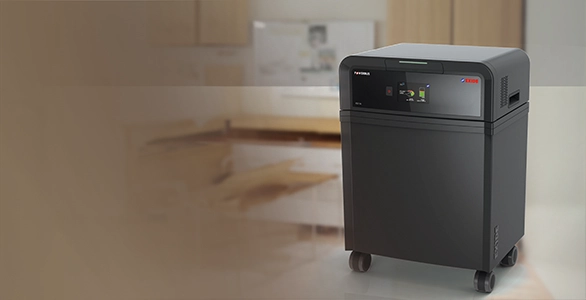
The display is grouped into a single pill-shaped element that stays legible from across the room, useful in an operating room (OR) where a clinician is often several steps from the unit. The design carries gentle, rounded surface transitions in place of hard module breaks. A moulded handle lets the unit move between the operating room and an ambulance without a separate case or fitting.
Designing for a clinical environment
A device used in an OR carries a narrower margin for error than a household appliance. It has to be read correctly at a glance, easy to wipe down between patients and durable enough for continuous use across a shift. These considerations shaped the design as much as its appearance.
Ticket Design’s own launch post put it plainly, medical devices don’t have to feel intimidating, and this one is simple, restrained and beautifully functional, exactly how medical design should be.
The project is an example of the medical device work we do with manufacturers, a device redesigned for calm, legible use under pressure, without changing the clinical performance underneath it.
Talk to us about a medical device or clinical product design project.











Start a conversation.
We design products that compete and win. Tell us what you are working on.


