What an outside perspective brings to product design innovation
Some reflections, after twenty years of designing products, on why a fresh pair of eyes so often makes the difference
After more than two decades of designing products — across healthcare, mobility, home appliances, industrial systems and packaging — we have noticed something about where innovation actually comes from. It tends to arrive less from a shortage of talent than from the way a familiar problem gets looked at.
The teams we work with are full of capable, experienced people who know their products inside out. They’ve lived with every feature and every constraint for years, and that depth of knowledge is one of their real strengths. It comes with a subtle cost, though. When you’ve seen something every day for a long time, it becomes genuinely hard to see it the way someone encountering it for the first time does. And the people buying and using these products are encountering them for the first time all the time.
Perspective usually comes first
When people picture innovation, they usually picture technology — a new feature, a new material, a new platform. In our experience, the more interesting starting point is often a simple question that someone is willing to ask about something everyone else has quietly accepted.
Procter & Gamble built a whole programme around that idea. When it launched Connect + Develop in 2001, it had no shortage of brilliant scientists. What struck its leadership was how much capability existed beyond their own walls — by their own estimate, for every researcher inside the company there were around two hundred people elsewhere in the world doing equally good work. So they went looking for ideas outside, deliberately, and made it a goal to source a large share of their innovation that way. The lesson has stayed with us: the ideas were out there all along, and the progress came from being willing to go and look for them.
A medical technology and the long road to becoming a product
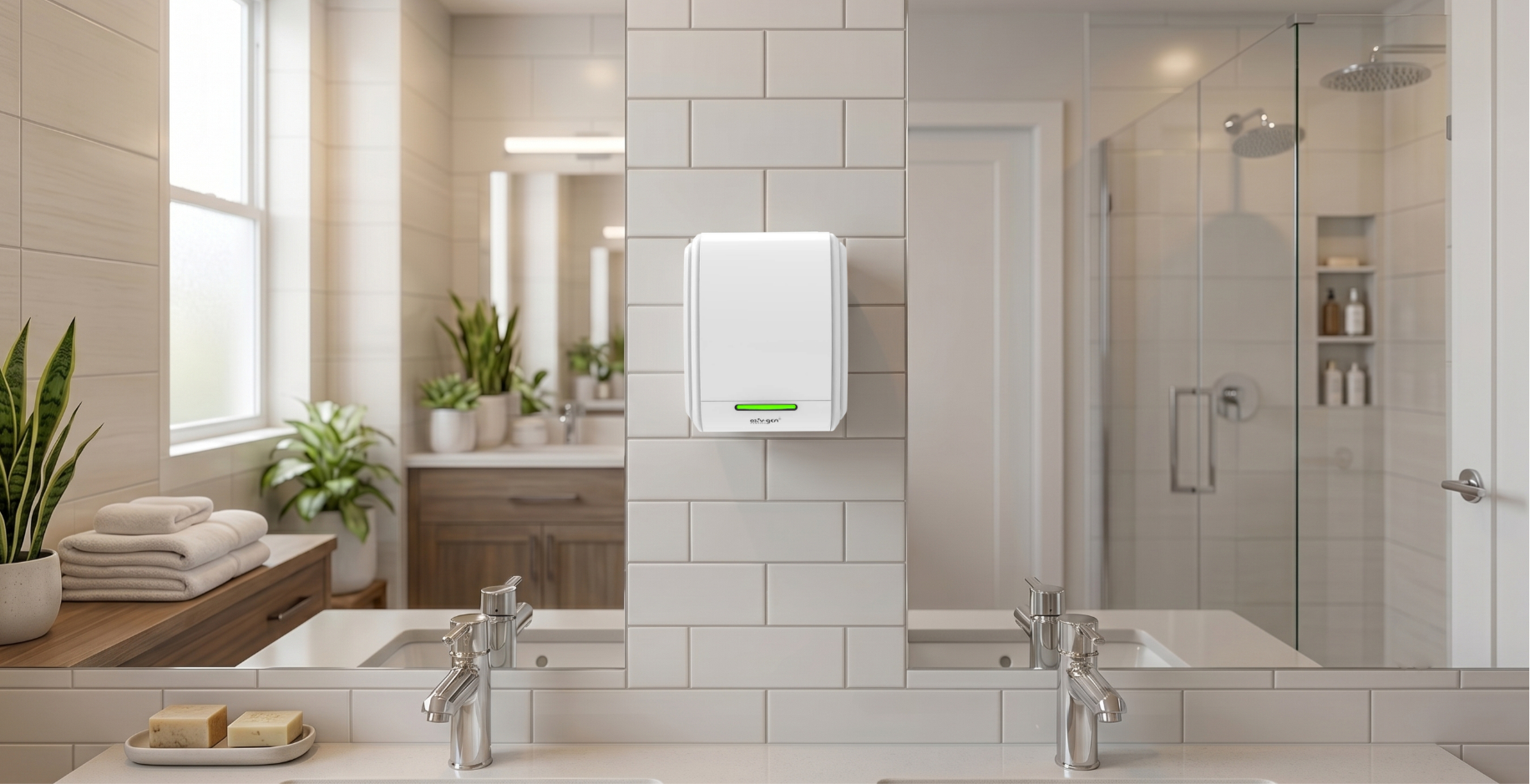
A favourite example from our own work began with a technology that had nothing to do with the air in a room.
A company called Fragrance Delivery Technologies, based in Dubai, had acquired a remarkable piece of engineering: a patented fuel cell of the kind first developed in space/ medicine applications, to release precise, steady doses of a drug over time. Someone had realised that the same quiet, continuous delivery could be used to release fragrance instead. It was an original idea and it worked.
What they had was the heart of a product — a technology that did something genuinely new. Turning it into something a hotel, an office or a hospital would want on its wall and keep paying for, year after year, was a different kind of problem, and that’s where they brought us in.
The work turned out to be as much about business and everyday behaviour as about form. We started by questioning what an air freshener even needed to look like. Most people picture a clunky plastic box tucked into a corner, and we wanted to get well away from that. So we compacted the whole format and designed a single dispenser-and-refill pairing first, almost as a proof — a way to hold the idea in your hands before it grew into anything larger.
From there it became a system. We designed the dispenser to be modular, so one coherent design could adapt to very different markets around the world and to a business built largely on private labelling for other brands. We developed new ways of loading, locking and ejecting the refills — small mechanisms, but ones people touch every time they service a unit, and they’re particular to this product family.
What grew out of all that is a whole range — VivaE, Oxygen-Pro, Oxygen-Supreme, Scentinel, Shield — sharing one design language, manufactured and customised to sell globally. A piece of acquired technology became a thriving global air-care business, with independently verified sustainability credentials that an aerosol can simply can’t match. For us, the lesson lives in the distance between a technology that works and a product people choose to bring into their day. Closing that distance took someone coming from outside, with no stake in how air fresheners had always been made, asking what the thing could become.
People meet products in moments
Working on that range reminded us of something we see in every category we touch: people don’t experience a product the way the company making it does. Inside a business, a product lives in roadmaps, specifications and launch dates. Out in the world, it lives in small, ordinary moments. The cleaner refilling a dispenser at six in the morning isn’t thinking about the fuel cell inside it; they just need the cartridge to click into place and work so they can get on to the next washroom.
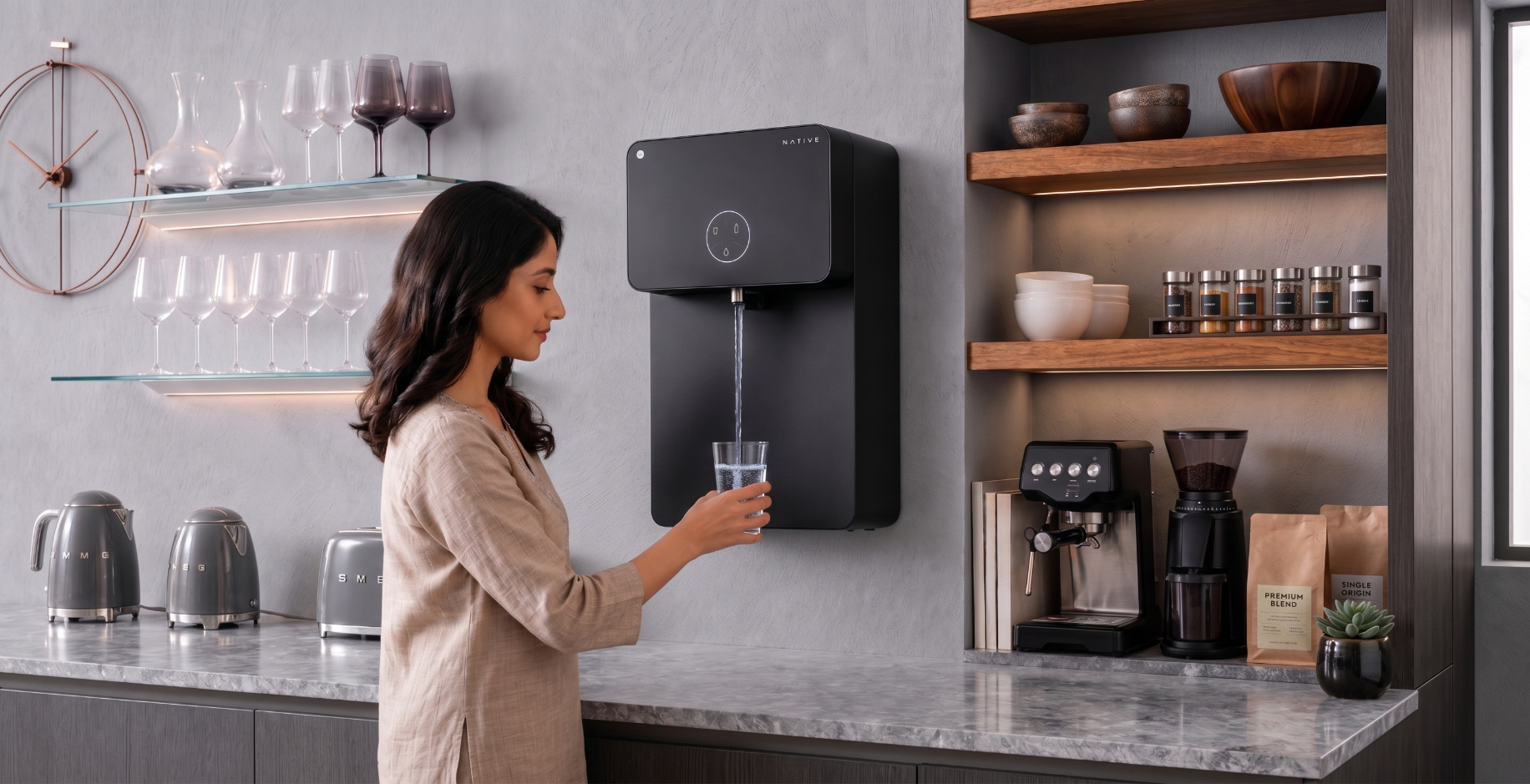
We saw something similar with Urban Company’s Native water purifier, where the question that mattered most to people at home had less to do with how well it filtered water and more to do with whether they trusted it and wanted to live with it. The opportunities that matter most tend to sit in moments like these — in the texture of actually owning and using something, day after day.
The first thing a product says about itself
We think about packaging in the same spirit, as part of that experience rather than a wrapper added at the end. By the time someone has picked a product up off a shelf, they’ve already formed an impression — of quality, of care, of whether this is something to trust. Packaging travels a long way, through warehouses and stores and into people’s homes, and it shapes how a product is felt before it’s ever switched on. Some of our packaging work has been recognised among the best in Asia, and what we took from it is that the packaging is already speaking for the product long before the product can speak for itself.

Two ways of looking at the same product
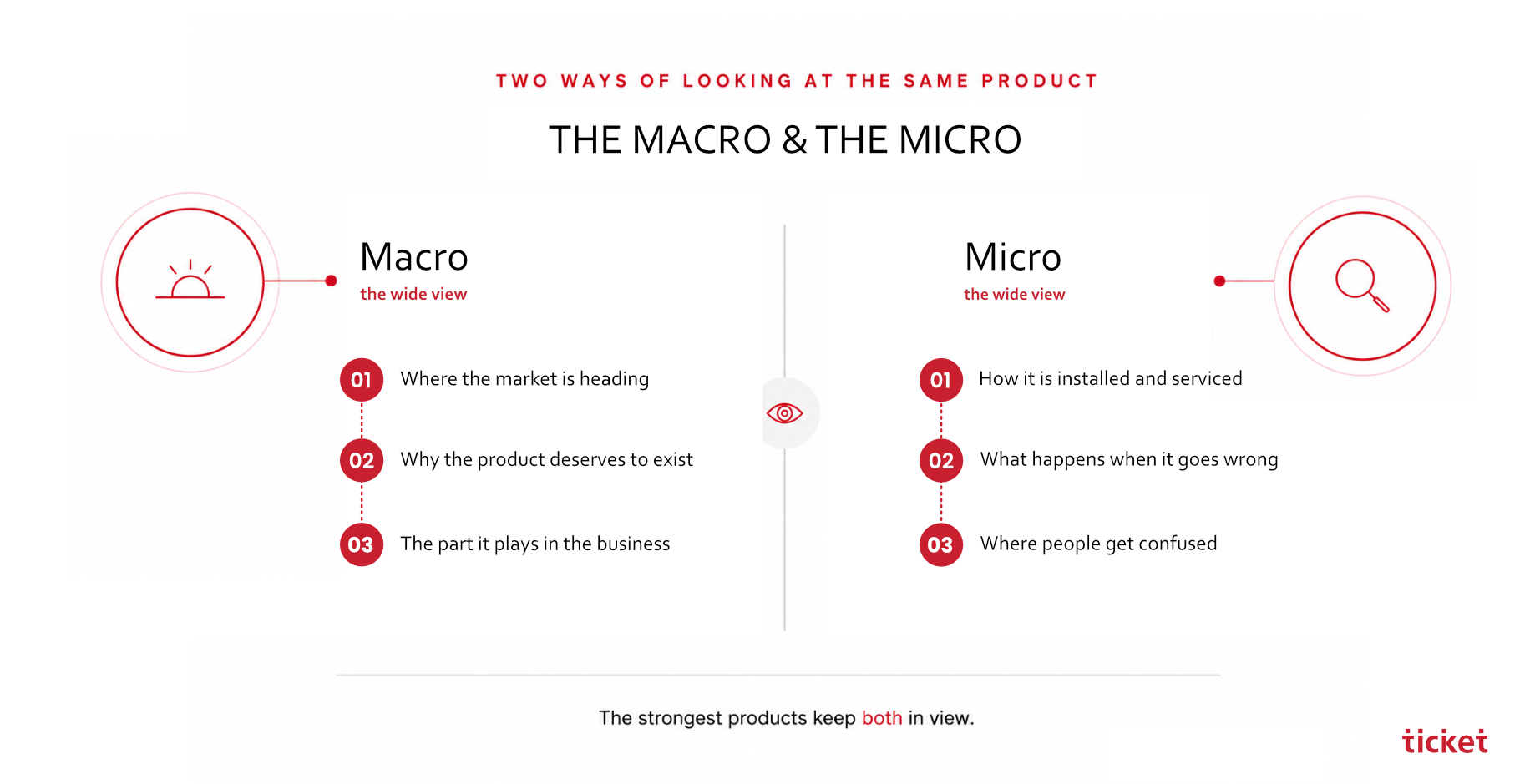
We find ourselves holding two views at once on most projects. One is wide: where the market is going, why a product deserves to exist, what part it can play in a business. The other is close up: how the thing is installed, refilled and serviced, what happens when it goes wrong, where someone is likely to get confused. A product can do well on the big picture and still struggle in the small details people actually live with and the work we care about most comes from keeping both in view at the same time.
Ideas have to survive the real world
There’s a point in every project where the idea meets reality — manufacturing limits, the realities of assembly, how something will be serviced, regulations, cost. A lot of promising ideas lose their shape right here. We’ve learned to welcome that stage rather than dread it, because those constraints usually make the work better. With the Oxygen range, designing it to be manufactured cleanly, produced in modular form for different markets and adapted for other brands was exactly what allowed the idea to grow up into a business that could reach people at scale.
What an outside perspective really brings
What an outside view adds, we think, is a willingness to ask about the things that have stopped being questioned, and to notice the small moments where a product is quietly earning or losing someone’s trust. We’ve felt the value of that on projects of every size. The same way of working shaped Etherena, an assistive medical device we designed that went on to earn a Red Dot Award and a patent and became a first of its kind in its field.
After enough years of this, we’ve come to believe that products are mostly made or lost in quiet, ordinary places — in the choice of who a product is really for, in the half-second it takes a refill to click into place, in the moment someone looks at a thing and wonders what to do next. Those moments are easy to miss when you’re close to the work and have seen them a thousand times over. Coming at them fresh is how you notice them again. And every so often, one of those small noticings — a working technology finally seen as a product someone would want to live with, a daily routine nobody had thought to design around — is what turns a good idea into something people genuinely welcome into their lives.
If something here resonates — a category that’s stopped moving, a technology in search of a product, a routine no one has thought to design around — we would love to hear about it.


